
Nokia "EOS"
- Thread starter benrp
- Start date
You are using an out of date browser. It may not display this or other websites correctly.
You should upgrade or use an alternative browser.
You should upgrade or use an alternative browser.

vlad0
New member
- Oct 9, 2012
- 1,069
- 0
- 0
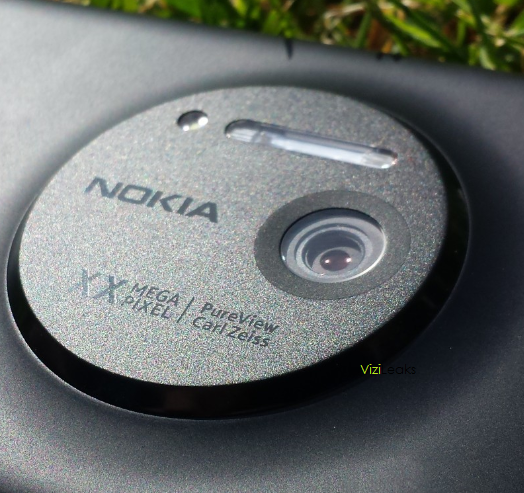
Looking good... that profile.. has to be the HES9 sensor.
Most people said that the hump makes the device "niche" ... we will see how this goes.



a5cent
New member
- Nov 3, 2011
- 6,622
- 0
- 0
@vlad0
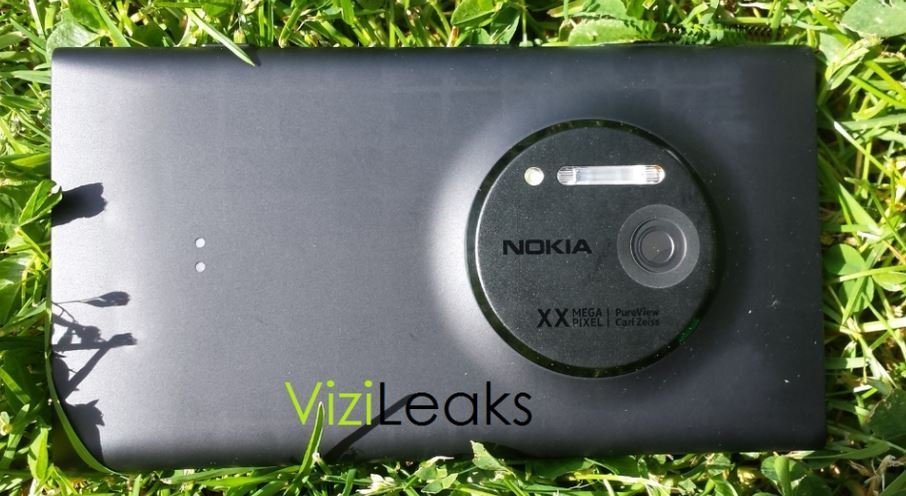
I would have expected the lens and the hump to be concentric. That doesn't seem to be how this works. I suspect the sensor is entirely contained within the area marked by the darker ring around the lens. But then, what exactly does that hump contain? Any idea?
I would have expected the lens and the hump to be concentric. That doesn't seem to be how this works. I suspect the sensor is entirely contained within the area marked by the darker ring around the lens. But then, what exactly does that hump contain? Any idea?

Juanma Herrera
New member
- Mar 4, 2013
- 48
- 0
- 0
vlad0
New member
- Oct 9, 2012
- 1,069
- 0
- 0
@vlad0
I would have expected the lens and the hump to be concentric. That doesn't seem to be how this works. I suspect the sensor is entirely contained within the area marked by the darker ring around the lens. But then, what exactly does that hump contain? Any idea?
Hm.. I was asking myself the same thing. On the 808 the module looks like this:

And I don't think that there is anything around it on the board
this from the top

this from the bottom

my best guess is... the capacitors for the xenon, which reside around the module on the 808. Its also important to not that the loud speaker is no longer inside the camera hump, which is the case on the 808.

Michael-Dallas
New member
- Feb 10, 2011
- 228
- 0
- 0
That be it!
vlad0
New member
- Oct 9, 2012
- 1,069
- 0
- 0
a5cent
New member
- Nov 3, 2011
- 6,622
- 0
- 0
Hm.. I was asking myself the same thing. On the 808 the module looks like this:
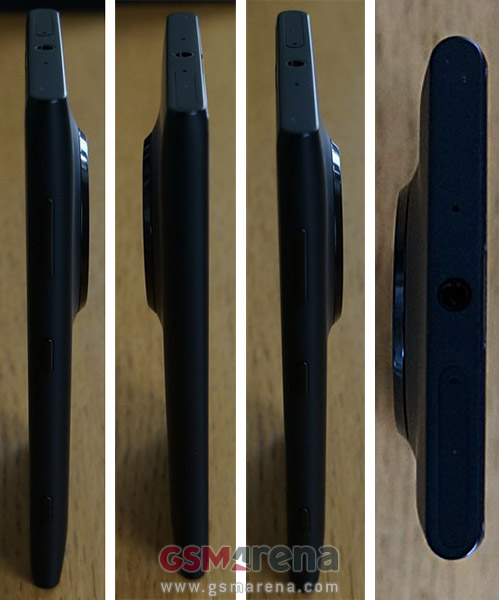
Yeah, but the 808 wasn't designed to be thin... the capacitors and the speaker could easily have fit in a device of 10 mm thickness or less, and without the hump. The only thing that requires the hump is the camera module. A lot of air pockets exist in that design.
Anyway, looking forward to seeing what is actually in there. I hope it's not just wasted space as it is on the 808.
vlad0
New member
- Oct 9, 2012
- 1,069
- 0
- 0
Yeah, but the 808 wasn't designed to be thin... the capacitors and the speaker could easily have fit in a device of 10 mm thickness or less, and without the hump. The only thing that requires the hump is the camera module. A lot of air pockets exist in that design.
Anyway, looking forward to seeing what is actually in there. I hope it's not just wasted space as it is on the 808.
I am sure someone will take it apart as soon as they release it, and we will find out.. but the last thing the engineers want to do is waste space, so I am sure there a good reason for it on both devices.
They are taking a different approach with the EOS for sure..
The LED is not part of the Xenon assembly anymore, the xenon looks thinner and longer, and the loud speaker is not there as well.

To me the 808 makes more sense in terms of arrangement..
a5cent
New member
- Nov 3, 2011
- 6,622
- 0
- 0
I am sure someone will take it apart as soon as they release it, and we will find out.. but the last thing the engineers want to do is waste space, so I am sure there a good reason for it on both devices.
Certainly engineers don't want to waste space, but typically product managers define goals based on what they think the market wants to buy. I simply doubt that "designing a thin device" was one of the stated design goals for the 808, whereas I assume market pressures are forcing Nokia to make that a higher priority for the EOS. Obviously, that is all just speculation on my part, but that's the impression the 808 leaves on me.
Anyway, thanks for your input.
echoshizzle
New member
- Nov 22, 2012
- 19
- 0
- 0
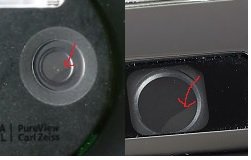
I'm a loser but i just noticed the cover on the lens is similar. Is it like this in other devices? I tried to find pics of the N8 and noticed it looks like it closed somewhat differently.
Seems like this is going to be the 41 mp we were all waiting for. I'm betting separate processing for the images and still using the good ole dual core/1gb team for the processing power of the phone.
vlad0
New member
- Oct 9, 2012
- 1,069
- 0
- 0
There is another angle on that whole 41mpix number game..
I assume that most people that read this thread know that the 808 is not about the number of pixels, but more about how they are used, mainly for lossless zooming and oversampling.
But considering that in the US most people don't know that 41Mpix phones even exist, or... even stand alone cameras for that matter, the 41Mpix number has a HUGE marketing potential! I still remember when Nokia presented the phase 1 system last year... it took the tech blogosphere, and most people (including myself) a couple of days/weeks to figure out exactly what they've done. I mean.. we went from 8/12Mpix market up to 41Mpix overnight. No one knew about it, so it was kind of a shock.
So if Nokia play their cards right this time.. it can be big.
True.. only people at Nokia know what is truly behind those design decisions, but I really doubt that they would intentionally leave empty space.
The room around the EOS sensor is indeed intriguing..i really can't think of anything that would require so much room around the module. Like I said, the only thing around the module on the 808 are the loud speaker and the two xenon capacitors. Its tightly packed in there..
you can see it here @ 2:13 min
here
spot on..
I assume that most people that read this thread know that the 808 is not about the number of pixels, but more about how they are used, mainly for lossless zooming and oversampling.
But considering that in the US most people don't know that 41Mpix phones even exist, or... even stand alone cameras for that matter, the 41Mpix number has a HUGE marketing potential! I still remember when Nokia presented the phase 1 system last year... it took the tech blogosphere, and most people (including myself) a couple of days/weeks to figure out exactly what they've done. I mean.. we went from 8/12Mpix market up to 41Mpix overnight. No one knew about it, so it was kind of a shock.
So if Nokia play their cards right this time.. it can be big.
Certainly engineers don't want to waste space, but typically product managers define goals based on what they think the market wants to buy. I simply doubt that "designing a thin device" was one of the stated design goals for the 808, whereas I assume market pressures are forcing Nokia to make that a higher priority for the EOS. Obviously, that is all just speculation on my part, but that's the impression the 808 leaves on me.
Anyway, thanks for your input.
True.. only people at Nokia know what is truly behind those design decisions, but I really doubt that they would intentionally leave empty space.
The room around the EOS sensor is indeed intriguing..i really can't think of anything that would require so much room around the module. Like I said, the only thing around the module on the 808 are the loud speaker and the two xenon capacitors. Its tightly packed in there..
you can see it here @ 2:13 min
here
I'm a loser but i just noticed the cover on the lens is similar. Is it like this in other devices? I tried to find pics of the N8 and noticed it looks like it closed somewhat differently.
Seems like this is going to be the 41 mp we were all waiting for. I'm betting separate processing for the images and still using the good ole dual core/1gb team for the processing power of the phone.
spot on..
I also am very very curious about why the camera wouldn't be centred... It could be a capacitor to the left of the lens, it could also be a processor but most rumours clock this as a quad core and if they split it 50/50 that leaves quite a lot for the camera...
This might be a mad idea but I noticed on the verge or tech radar they mentioned the possibility of aperture change... Now could this be nothing or it could be part of that... lens swapping... think 3 disc cd-changer... filtered, large and small...or various zooms.... I know its a mad idea but the area of the hump is bigger than the 808 and as many have said there is "less" in it, as in no speaker, what looks to be smaller (but longer) flash... So whats in there... If you check the yellow leak you can see where the camera goes, what looks like the flash only down the bottom not the top, prolly capacitor for flash or motor to drive cd-changer and a large area opposite the camera (left of) that's the battery... so that still leaves a lot of space above the battery in the black part itself, like the flash as no space "in" the phone is used for it.... and they wouldn't sit the capacitor above the battery.... serious heat problems.... anyway my 2 cents...
I'd also like to add thank you nokia for going back and going L800 on the screen.... there's no rim thing between the glass and the poly.... made the 800 sooooo sleek and ruined the 920 (I own a 920) was such a peev with me.... I just singled it out as THE worst thing about the phone because after the 800 it was like wtf are you doing moving back.... I know it prolly made it harder to build, the 920 being hard anyway but come on.... To me the 800 in white is the best looking phone on earth (had to buy one to replace the one I lost even tho I had a 920)... so clean, and Metro makes it pop with the super blacks and yea.... I'm so happy they went back with this.... even the tapered ends.... this in white..... mmmmmm......
This might be a mad idea but I noticed on the verge or tech radar they mentioned the possibility of aperture change... Now could this be nothing or it could be part of that... lens swapping... think 3 disc cd-changer... filtered, large and small...or various zooms.... I know its a mad idea but the area of the hump is bigger than the 808 and as many have said there is "less" in it, as in no speaker, what looks to be smaller (but longer) flash... So whats in there... If you check the yellow leak you can see where the camera goes, what looks like the flash only down the bottom not the top, prolly capacitor for flash or motor to drive cd-changer
and a large area opposite the camera (left of) that's the battery... so that still leaves a lot of space above the battery in the black part itself, like the flash as no space "in" the phone is used for it.... and they wouldn't sit the capacitor above the battery.... serious heat problems.... anyway my 2 cents...I'd also like to add thank you nokia for going back and going L800 on the screen.... there's no rim thing between the glass and the poly.... made the 800 sooooo sleek and ruined the 920 (I own a 920) was such a peev with me.... I just singled it out as THE worst thing about the phone because after the 800 it was like wtf are you doing moving back.... I know it prolly made it harder to build, the 920 being hard anyway but come on.... To me the 800 in white is the best looking phone on earth (had to buy one to replace the one I lost even tho I had a 920)... so clean, and Metro makes it pop with the super blacks and yea.... I'm so happy they went back with this.... even the tapered ends.... this in white..... mmmmmm......

- Sep 5, 2012
- 118
- 0
- 0
Hmm, a little disappointed with the new photos. I actually preferred the 808 style with the chrome and glass around the camera piece, and the omission of built in wireless charging is a pain, but hell I don't think I'll be able to stop myself buying this. Unless a second device with a new aluminium build and a screen that takes up more of the front face is leaked as well as a spec bump I think I'll end up with this.

MAERSK
New member
- Mar 18, 2012
- 213
- 0
- 0
Also itching to see whats underneath there. My guess would be processor. I wonder if they kept the 5 element lens of the 808 or modified it to 6 like the new L925. The phone is a bit ugly but I agree it'll look best in white. I actually think the 808 is better looking although thicker. Leaked pictures galore certainly made today interesting.
Similar threads
- Replies
- 2
- Views
- 42K

- Replies
- 10
- Views
- 24K
- Replies
- 4
- Views
- 4K

- Replies
- 0
- Views
- 4K

Trending Posts
-

-

-
 Windows 10 Themes no longer working...
- Started by DocCovington
- Replies: 6
-
 I'm looking for a CalDAV, CardDAV client for Windows
- Started by xandros9
- Replies: 1
Forum statistics

Space.com is part of Future plc, an international media group and leading digital publisher. Visit our corporate site.
© Future Publishing Limited Quay House, The Ambury, Bath BA1 1UA. All rights reserved. England and Wales company registration number 2008885.
 Facebook
 Twitter
 Instagram